Sept
16
7:00 pm19:00
Monthly Members’ Night - second Wednesday of each month except January.
One or two short talks, and maybe a quiz.
We will begin the evening with any HAS news, followed by one or more shorter talks by various members. If the weather is clear, and we have anyone available to operate telescopes, we may get these out for some viewing.
We will have hot drinks and biscuits available. After the talk, there will be time for questions, followed by informal chat over more tea and coffee for those who wish to stay longer.
Details and exact start and end times to come.
Monthly Members’ Night - second Wednesday of each month except January.
Tonight - A presentation, followed by informal chat over tea or coffee. Telescope viewing possible afterwards depending on weather and availability of scope operators.
Speaker: Charlie Cooper (from Hamilton Astronomical Society)
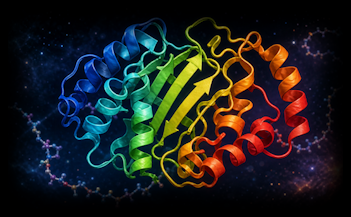
Tonight, Charlie Cooper will be taking a break from talking about rockets and will be delving into biochemistry, drawing on his background in biomedical science, pharmacology and toxicology to explore one of the most fundamental components of life: proteins.
The talk will look at what proteins are, how chains of amino acids fold into extraordinarily complex three-dimensional structures, and why those structures are so central to almost every biological process. The talk will explore enzymes, receptors, structural proteins and signalling molecules, along with what happens when protein folding goes wrong.
From there, the talk will move into the rapidly developing world of modern protein science: proteomics, peptide and protein synthesis, protein engineering, and the remarkable advances in computational structure prediction led by systems such as AlphaFold. We’ll also consider how these technologies are beginning to let scientists not only understand proteins, but increasingly design entirely new ones.
Although this will not be a talk about astronomy per se, it is sure to be a science topic that astronomy enthusiasts and those with an interest in astrobiology will find fascinating.
Private Booking to 10:45 am (JP)
Join us at the Hamilton Astronomical Society to view Matariki on Friday morning, the 10th of July. The event will run from 5:30 am to sunrise at 7:30 am. Matariki rises just before the Sun at 5:10 am, and by 7:00 am, as the Sun rises, Matariki will no longer be visible. Fingers crossed for clear skies! Please note that if the weather is fine, it’s likely to be a very busy morning. We are a volunteer organisation with limited resources and we will do our very best to ensure everyone is able to view Matariki through a telescope or through binoculars.
The Zoo café will be open for hot drinks.
As the light from cars, mobile phones and torches will reduce the night vision of those viewing, we ask that you try to minimise their use around the viewing area and park in the carpark opposite the Zoo. A friendly reminder to dress warmly for a cold morning. A gold coin Koha / donation is much appreciated upon entry.
Reminder: Parking is available in the carpark opposite the Zoo.
We hope to see you there!
Monthly Members’ Night - second Wednesday of each month except January.
Tonight - A presentation, followed by informal chat over tea or coffee. Telescope viewing possible afterwards depending on weather and availablilty of scope operators.
Speaker: Chris Benton (from Auckland Astronomical Society)
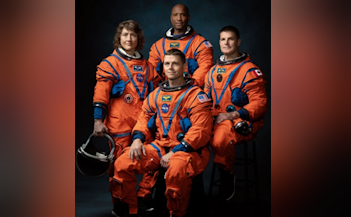
The recent NASA Artemis II mission marks the beginning of astronauts returning to the Moon, with plans to eventually build a Moon base and then move on to Mars by 2030 and 2040, respectively. How much radiation will Moon- and Mars-bound astronauts be exposed to, including traversing Earth’s Van Allen Belts, and what is their risk of radiation-related illness or diseases from such journeys? Come along for an in-depth discussion on what radiation is, where it comes from, how it affects the body, and how much is considered acceptable. Finally, we discuss current and future countermeasures, including important data from the 2022 Artemis I mission. Learn about NASA’s current research that benefits astronauts, cancer patients, and society in general. All attendees receive a comprehensive multi-page handout.
HAS Committee Meeting